

On 30 January each year, World Neglected Tropical Diseases Day reminds the global health community of a simple truth: no one should suffer from diseases that are both preventable and treatable. Yet across Africa, millions of people live with skin neglected tropical diseases (NTDs) that are often overlooked, poorly understood and stigmatised. At SkincAIr, we envisage a future where technology empowers frontline healthcare workers, especially in remote and under-resourced areas, to detect these diseases at an early stage and ensure patients receive timely treatment.
Skin NTDs: hidden burdens in plain sight
Across Sub-Saharan Africa, skin NTDs significantly impact everyday life. Often dismissed as minor, these conditions can start with an itch, swelling or discolouration of the skin. However, if not recognised early, they can have serious consequences.
Scabies
Scabies causes relentless itching, sleep deprivation, and bacterial infections. It spreads quickly in overcrowded communities, yet is often normalised as ‘just a rash’.
Cutaneous leishmaniasis
Cutaneous leishmaniasis leaves painful lesions that can permanently scar the skin and affect confidence, as well as school and work attendance, particularly among women and children.
Leprosy
Despite being curable, leprosy remains prevalent. Missed early signs can lead to permanent nerve damage and disability.
Buruli ulcer
If left untreated, the initially painless Buruli ulcer can destroy skin and soft tissue.
Onchocerciasis
Onchocerciasis, also known as river blindness, first manifests as skin changes such as thickening, intense itching, and changes in pigmentation long before it affects the eyes.
Lymphatic filariasis
Lymphatic filariasis causes chronic leg swelling, thickened skin, and disability, which severely impact quality of life and economic participation.
Podoconiosis
Podoconiosis is caused by prolonged exposure to irritants soil while walking barefoot. Similar to lymphatic filariasis, it leads to leg swelling, but it is entirely preventable by wearing footwear and seeking early treatment.
Mycetoma
If left unnoticed, mycetoma progresses slowly but irreversibly, leading to deformity and disability.
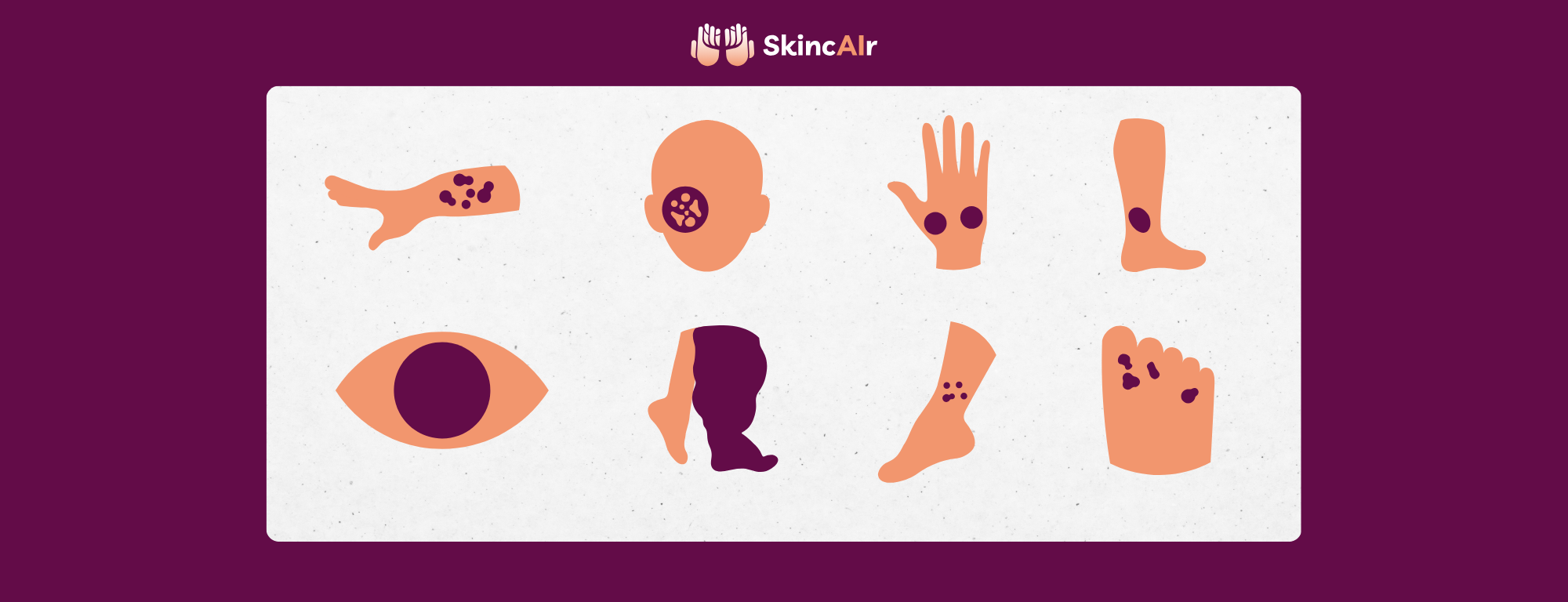
Where AI meets global health equity
Many of these conditions are visible yet overlooked. In primary care settings where dermatological expertise is scarce, even trained healthcare workers may find it difficult to distinguish between common rashes and serious infections or NTDs. This is where SkincAIr comes in.
SkincAIr is developing an AI-assisted mobile app designed to help frontline healthcare providers recognise the early signs of common and neglected skin conditions directly at the point of care. Our vision is to create an app that supports early detection, guides referral decisions, and strengthens integration with national NTD programmes.
By bridging the gap between technology and local health systems, we aim to reduce missed diagnoses and enable communities to access treatment sooner. Early recognition means fewer complications, less disability and, ultimately, better lives. At SkincAIr, we believe that technology has the power to transform this narrative when placed in the hands of healthcare professionals who are committed to improving skin health.
Together, we can ensure that skin health is recognised as a cornerstone of global health equity, rather than an afterthought. Because no person should face stigma from diseases that the world already knows how to treat.
If you want to always stay updated about our project, follow us on LinkedIn, Facebook, X and Bluesky!