

Africa’s Women’s Day, celebrated on 31 July, was established during the first conference of the Pan-African Women’s Organization (PAWO), held in Dar es Salaam, Tanganyika (now Tanzania), in July 1962.
As the African Union (AU) states, Africa’s Women’s Day offers a national, continental and global opportunity to recall and affirm the significant role of African women in the evolution of a strong Pan-African identity, with shared values, objectives and vision for the future. At SkincAIr we agree and would like to add that Africa’s Women’s Day is a celebration of strength and resilience. It is also an opportunity to reflect on the barriers that many women still face when accessing essential healthcare.
This is why we want to shed light on some of the direct health consequences of gender inequality.
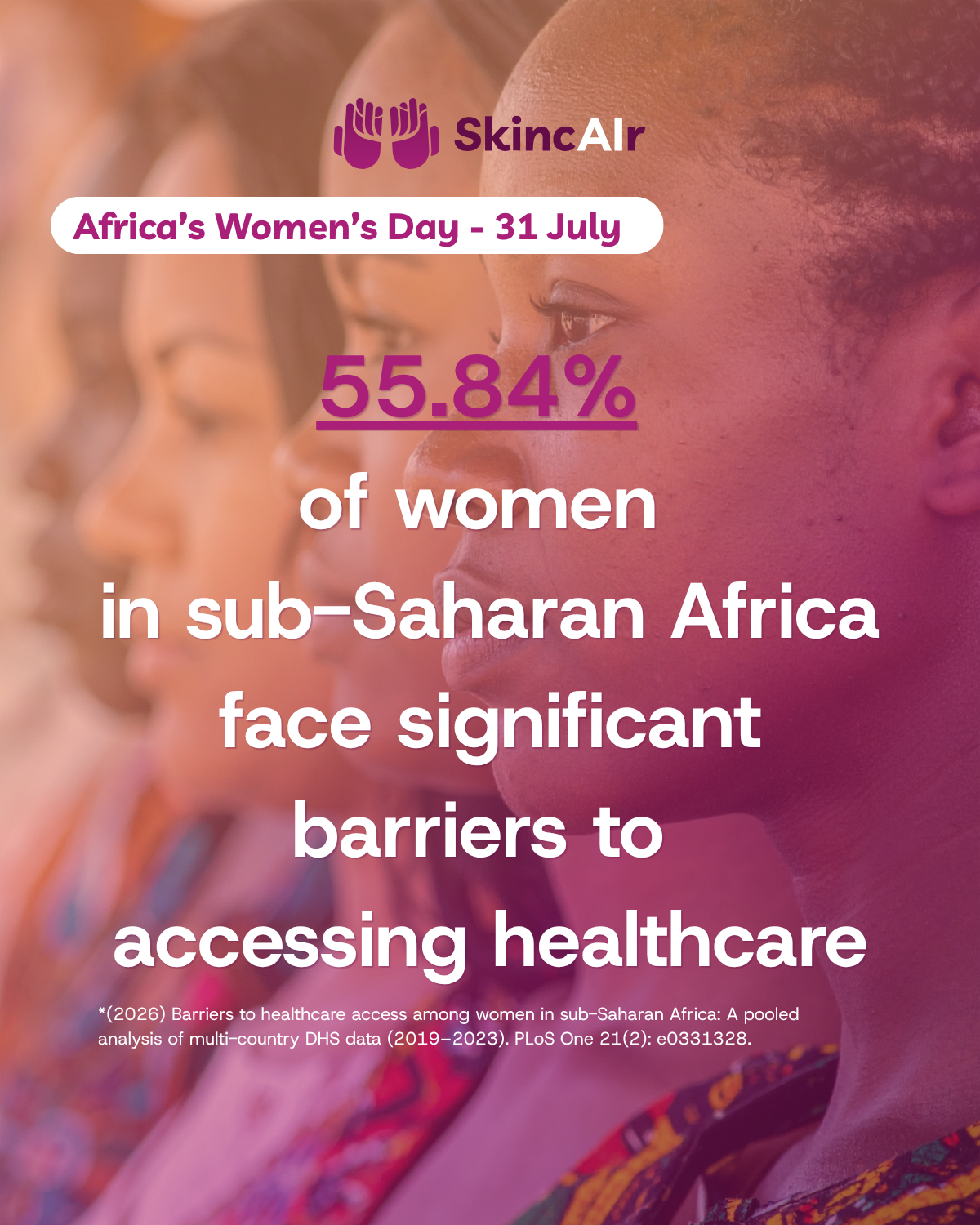
- 55.84% of women in sub-Saharan Africa face significant barriers to accessing healthcare. The main factors contributing to this are the difficulty of accessing funds and the distance to medical facilities.
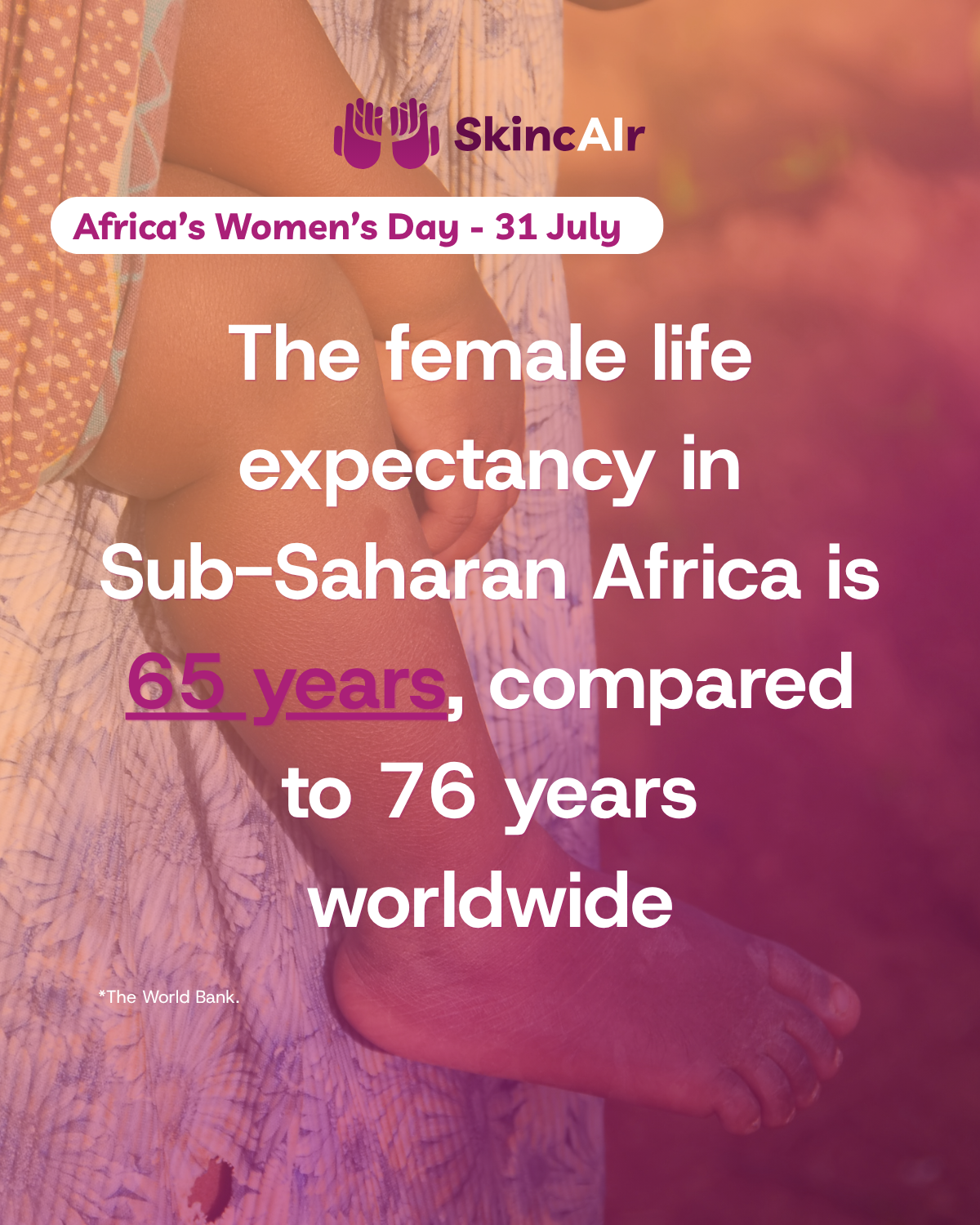
- The female life expectancy at birth in sub-Saharan Africa is 65 years, compared to 76 years worldwide. The EU has the highest female life expectancy, at 84 years. This massive gap is primarily driven by high rates of infectious diseases, maternal and infant mortality, and limited access to healthcare.
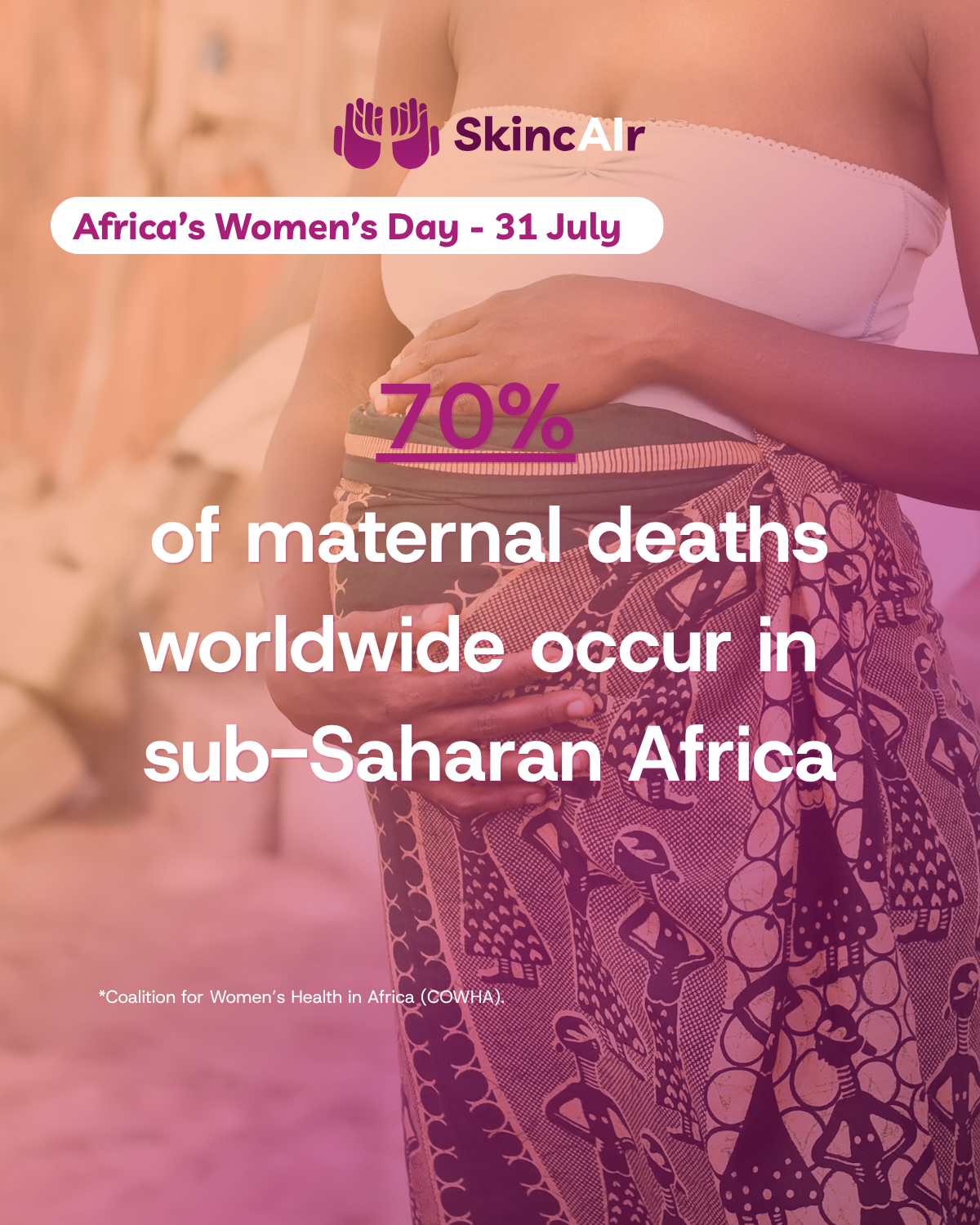
- 70% of maternal deaths worldwide occur in sub-Saharan Africa. According to the World Health Organization, although there have been overall reductions in maternal mortality worldwide, a pregnant woman in sub-Saharan Africa still faces a significantly higher risk of dying from pregnancy or childbirth complications during her lifetime. The vast majority of these deaths are preventable, generally resulting from severe bleeding, infections or high blood pressure during pregnancy.
Unequal access to healthcare can result in delayed diagnoses, limited treatment options and avoidable outcomes that have a disproportionate impact on women’s lives.
At SkincAIr, we believe that every woman deserves timely, accessible and equitable care. We support women’s health rights, raising awareness and working towards a future where no woman is left behind.
Achieving gender equality is key to creating healthier, less discriminatory societies.
If you want to always stay updated about our project, follow us on LinkedIn, Facebook, X and Bluesky!