

Written by Gustavo Hernández, SkincAIr project coordinator.
Neglected Tropical Diseases (NTDs) continue to affect more than one billion people worldwide, disproportionately impacting some of the most vulnerable and underserved communities. Among them, skin-related NTDs represent a major public health challenge across many regions of Sub-Saharan Africa, where diseases such as Buruli ulcer, cutaneous leishmaniasis, yaws, leprosy, mycetoma, and lymphatic filariasis can lead to severe physical, psychological, and socioeconomic consequences if not diagnosed and treated early.
Beyond the direct health impact, skin NTDs often carry a significant social burden. Visible skin lesions and disabilities may lead to stigma, discrimination, social isolation, and reduced educational and employment opportunities. In many cases, affected individuals delay seeking medical attention due to fear of exclusion or because healthcare services are geographically inaccessible.
One of the greatest challenges in managing skin NTDs is the shortage of trained healthcare professionals with expertise in dermatological diagnosis, particularly in rural and remote settings. Frontline healthcare workers frequently operate under difficult conditions, with limited access to specialist support, diagnostic tools, or continuous training. As a result, early signs of disease may be missed, increasing the risk of complications and ongoing transmission within communities.
At the same time, advances in digital health and artificial intelligence offer new opportunities to address these challenges. Mobile technologies, combined with AI-powered decision-support systems, have the potential to bring specialist-level assistance closer to the point of care, supporting healthcare workers in identifying suspicious cases, improving referral pathways, and strengthening disease surveillance systems.
This is the challenge that inspired the creation of SkincAIr. By combining expertise in global health, dermatology, artificial intelligence, data science, and digital innovation, the project seeks to contribute to earlier detection, improved management, and greater awareness of skin-related NTDs across Sub-Saharan Africa. Ultimately, our goal is not only to develop innovative technological solutions, but also to help reduce inequalities in healthcare access and improve the quality of life of affected communities.
After one year of collaborative work, the importance of this mission is clearer than ever. The experiences shared by healthcare workers, researchers, policymakers, and community representatives across our consortium continue to reinforce the urgent need for innovative, scalable, and locally adapted solutions to combat skin NTDs.
Looking back at our first year of SkincAIr, one word comes to mind: intensity.
This first year has been a whirlwind of activities, discussions, challenges, and achievements. What started as an ambitious vision has gradually evolved into a coordinated effort involving researchers, healthcare professionals, technical experts, policymakers, and community stakeholders across Europe and Sub-Saharan Africa, all working towards a common goal: improving the early detection and management of skin-related Neglected Tropical Diseases (NTDs).
I still vividly remember July 2025, when we gathered for the first time at the facilities of KEMRI in Nairobi, Kenya, for our Kick-Off Meeting. After months of online meetings during the proposal preparation phase, finally meeting face-to-face was a special moment. There was a genuine sense of excitement, optimism, and commitment across the consortium.
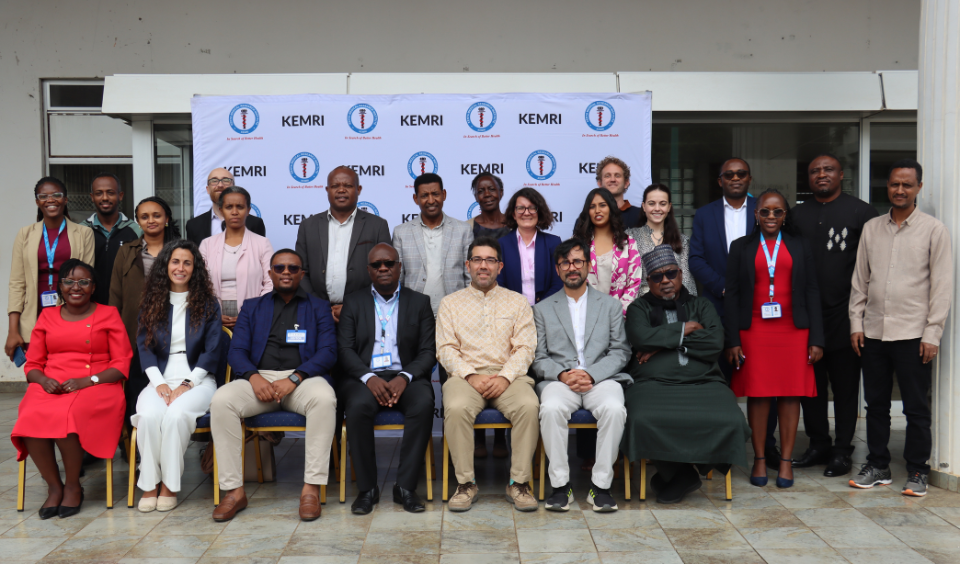
The meeting itself was memorable for many reasons. Due to public demonstrations taking place in Nairobi, our first day had to be conducted remotely. Yet, despite these unexpected circumstances, the following two days were incredibly productive. Discussions were dynamic, ideas flowed naturally, and decisions were made with remarkable efficiency. What struck me most was the feeling that we had been working together for years. In many ways, we had. The countless conversations, brainstorming sessions, and proposal-writing meetings that preceded the project had already built strong foundations of trust and collaboration.
Leaving Nairobi, I had the feeling that we were at the beginning of something truly meaningful.
Of course, the road ahead was not without challenges.
As with many international health research projects, we quickly encountered the complexities of regulatory, ethical, and administrative processes. Coordinating documentation across multiple institutions, countries, and languages required significant effort. Aligning procedures and requirements among five African countries participating in the clinical study was both challenging and enriching. Every discussion brought new perspectives and a deeper understanding of the local realities in which the project will operate.
One of the most rewarding aspects of this process has been the continuous learning. Every meeting reminds us that there is always more to understand about local healthcare systems, cultural contexts, and practical constraints. Reaching consensus across such a diverse consortium has required patience, openness, and mutual respect.
I would also like to highlight the extraordinary work of our technical teams. Their progress over the past year has been remarkable. From defining the digital architecture of the platform to developing the first prototypes of the mobile application and the supporting operational infrastructure, their dedication has transformed ideas into tangible results. Even seemingly simple tasks (such as ensuring that mobile devices reached remote study locations on time to begin data collection activities) became complex logistical challenges that required creativity, persistence, and teamwork to overcome.
Today, one year after the project’s launch, we are proud of what has been achieved.
Among the most significant milestones of this first year are:
- The successful completion of multiple co-creation workshops and multidisciplinary engagement sessions, allowing us to identify user needs and define a clear roadmap for the project’s technological solutions.
- The preparation and approval of ethics and regulatory documentation in the countries where research activities will be conducted.
- The establishment of a harmonised set of clinical variables, study objectives, and data collection procedures across participating countries.
- The registration of the SkincAIr clinical study, providing a solid framework for the project’s research activities.
- The development of mock-ups and initial versions of the SkincAIr mobile application, currently undergoing validation with stakeholders and end users.
- The implementation of the first components of the project’s operational and technical infrastructure, which will support future data collection, analysis, and AI development activities.
- We are building the biggest dataset ever created on NTDs.
These achievements represent much more than a list of completed tasks. They reflect the dedication, commitment, and collaborative spirit of every member of the SkincAIr consortium.
And perhaps most importantly, they provide the foundations upon which the next stages of the project will be built.
“If the first year has taught us anything, it is that addressing complex global health challenges requires not only innovation and technology, but also trust, collaboration, and a shared commitment to improving people’s lives. We are only at the beginning of the journey, and the most exciting chapters of SkincAIr are still ahead of us.”
One of the greatest achievements of SkincAIr during its first year has been the creation of a truly international and multidisciplinary community. Bringing together healthcare professionals, researchers, data scientists, engineers, policymakers, patient representatives, and public health institutions from Europe and Sub-Saharan Africa has allowed us to build a unique ecosystem of expertise and collaboration.
Throughout the year, consortium meetings, co-creation workshops, stakeholder engagement activities, and countless technical discussions have helped establish strong relationships between partners. Beyond the project’s scientific and technological objectives, SkincAIr has become a platform for mutual learning, cultural exchange, and capacity building. By working closely with local healthcare workers and institutions, we are ensuring that the solutions developed within the project are not only innovative but also adapted to the realities and needs of the communities they are intended to serve.
At its core, SkincAIr aims to harness the potential of Artificial Intelligence to support the early detection and management of skin-related Neglected Tropical Diseases. During the first year, significant progress has been made towards establishing the foundations required to achieve this goal. From defining data collection procedures and clinical variables to developing the first prototypes of the mobile application and supporting digital infrastructure, the project has laid the groundwork for future AI-driven innovations.
Our approach goes beyond developing algorithms. We are building a comprehensive ecosystem that combines clinical expertise, responsible AI, user-centred design, and robust data governance practices. As larger and more diverse datasets become available through the project’s clinical activities, SkincAIr will continue advancing towards the development of trustworthy AI tools capable of supporting frontline healthcare workers in some of the most resource-constrained environments.
Over the coming months, the project will focus on expanding clinical activities across participating countries, collecting high-quality data to support the development of AI-powered diagnostic tools, and refining the SkincAIr mobile application through continuous feedback from healthcare workers and stakeholders. We will also strengthen our collaboration with public health authorities, international organisations, and local communities to ensure that the solutions developed are sustainable, scalable, and capable of generating long-term impact.
At the same time, SkincAIr will continue investing in capacity building, knowledge sharing, and stakeholder engagement. By combining technological innovation with local expertise and real-world healthcare needs, we aim to create tools that empower frontline healthcare workers and contribute to reducing the burden of skin-related Neglected Tropical Diseases across Sub-Saharan Africa.
The journey is still in its early stages, but the enthusiasm, commitment, and collaborative spirit demonstrated during this first year give us confidence that we are moving in the right direction. Together, we look forward to transforming ideas into impact and bringing innovative solutions closer to the communities that need them most.