

Written by Teacup Lab.
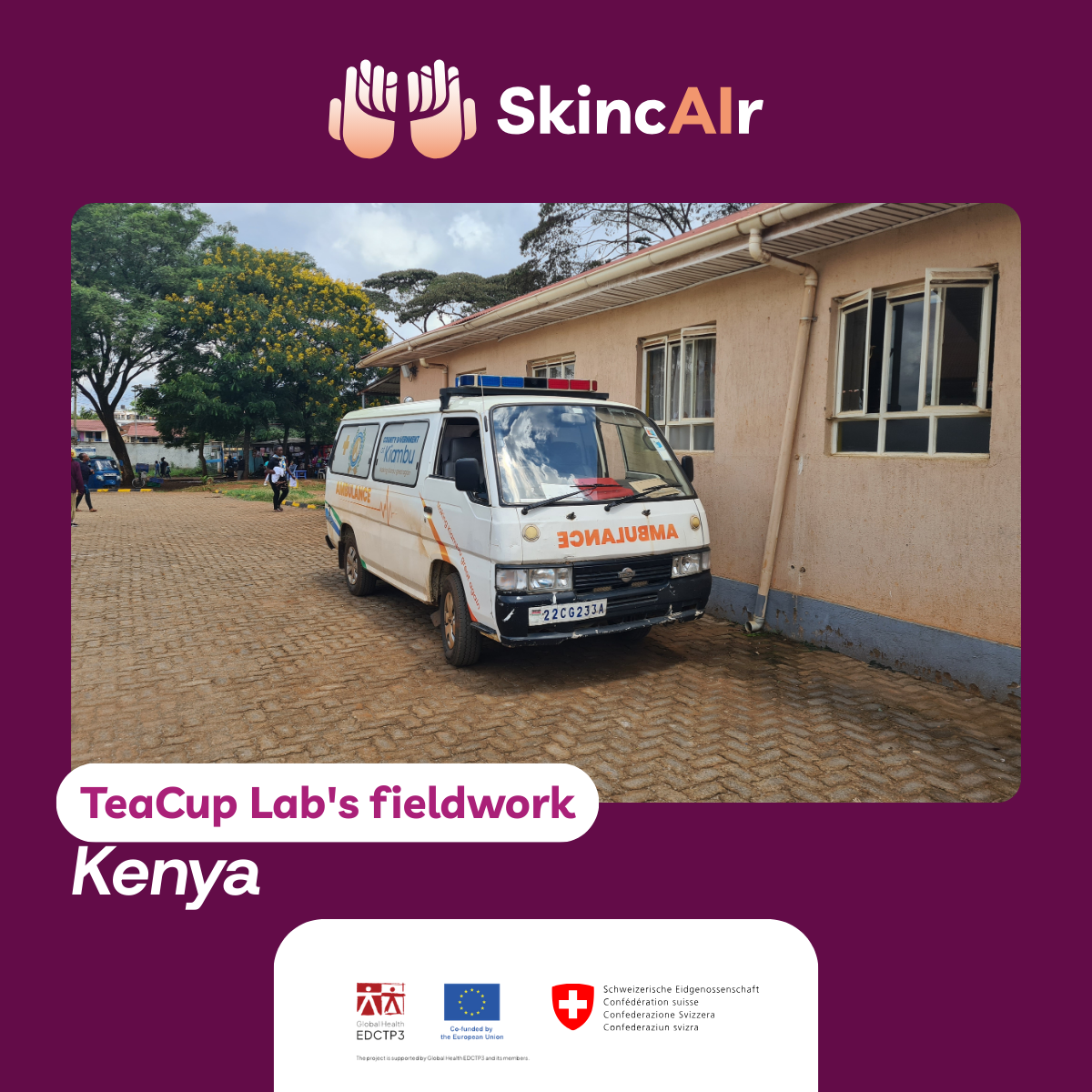
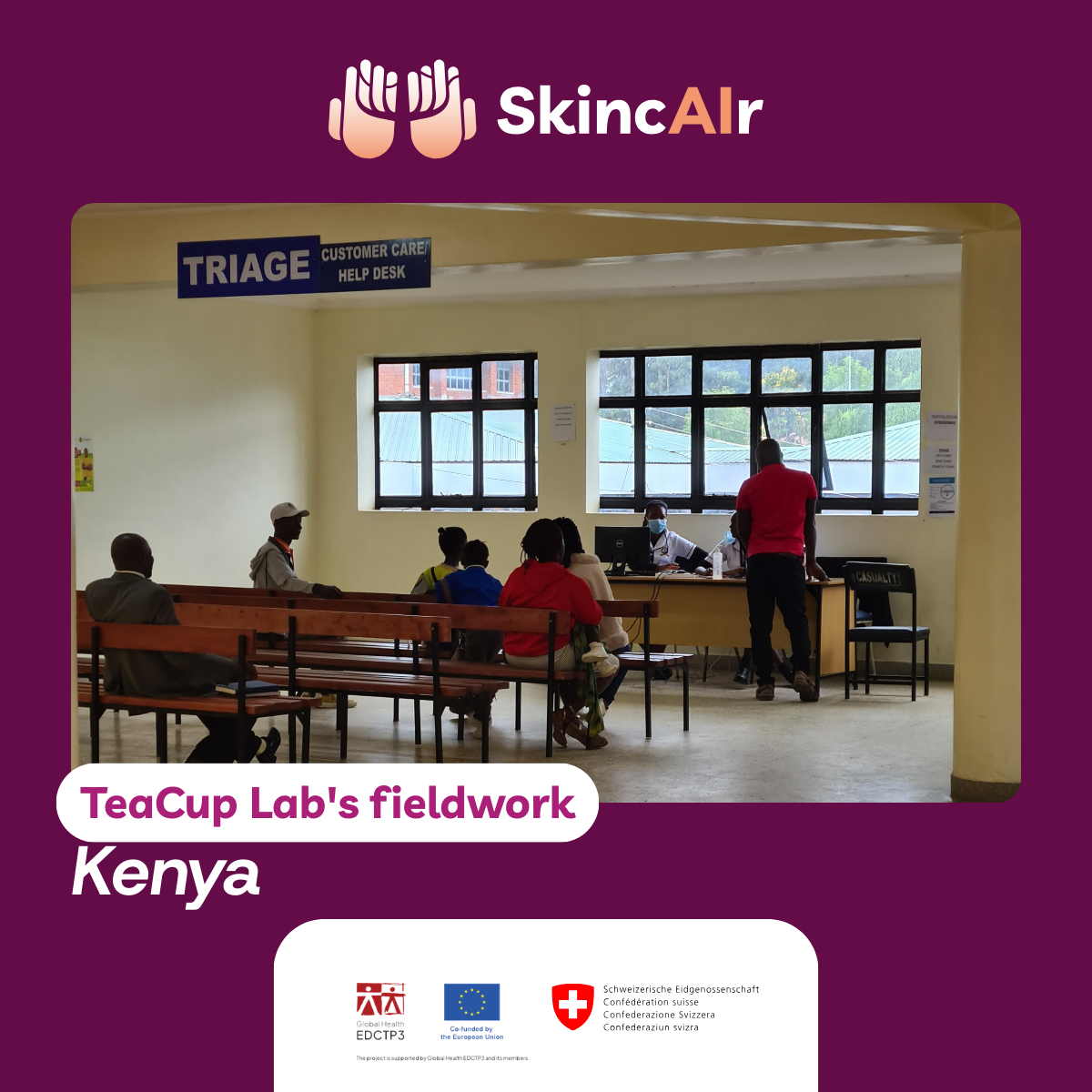
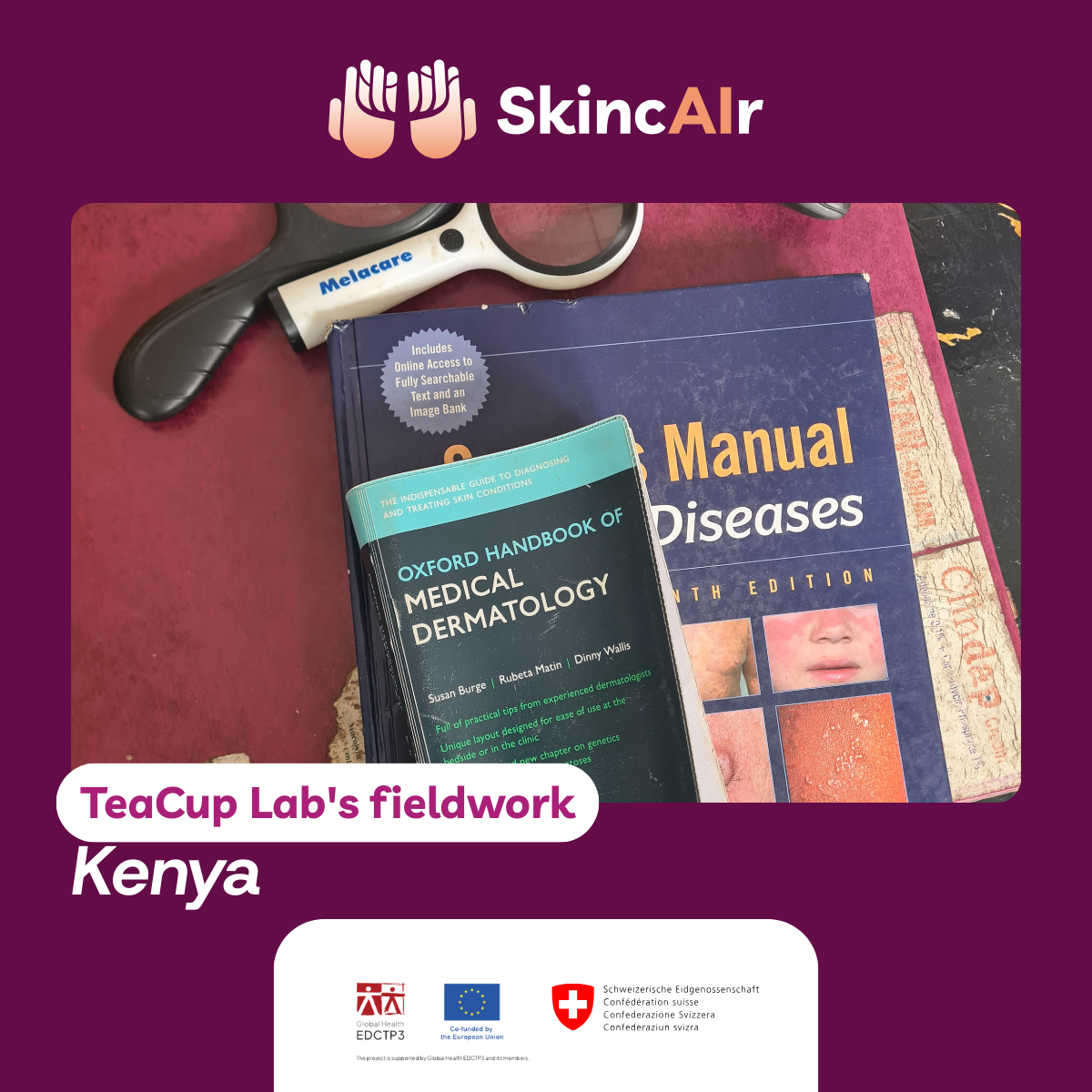
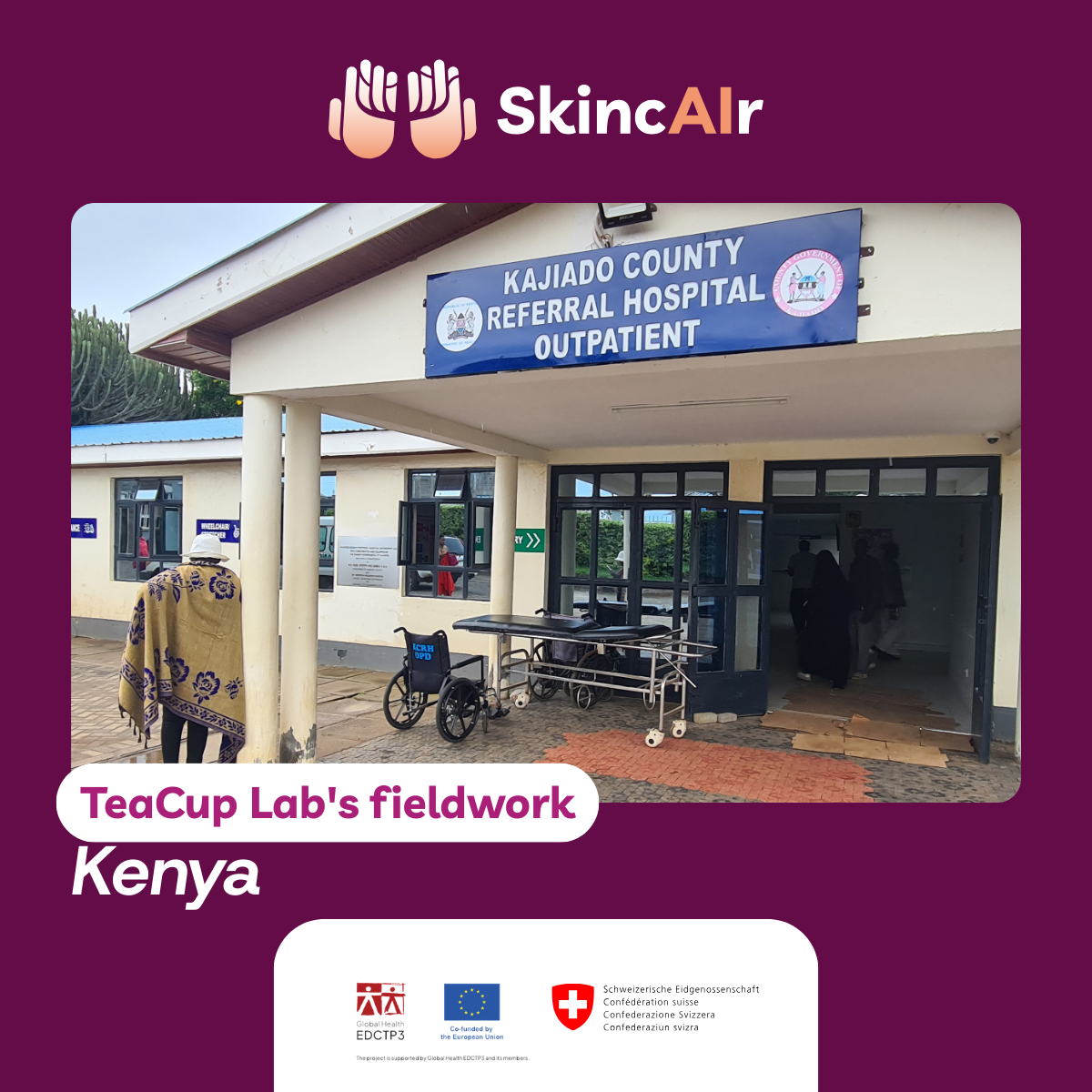
Over the past weeks, we’ve been on the ground in Kenya, working closely with frontline healthcare workers (FHWs) to understand how neglected tropical skin conditions (NTDs) are diagnosed and managed in real-life settings.
What we found was not just a set of challenges, but a rich, complex ecosystem of practices, constraints, and ingenuity. These insights are now shaping how we think about SkincAIr, not just as a tool, but as something that needs to fit into existing workflows, realities, and trust systems.
Below, we share three key takeaways from this phase of the project.
What technical foundations does SkincAIr need?
One of the clearest learnings is that technology alone is not enough; it has to be deeply contextual.
First, image quality and clinical context are critical. Healthcare workers already take photos of skin conditions using their phones and share them with peers or specialists, often via WhatsApp. But images alone are not sufficient. For a diagnosis to be meaningful, they need to be paired with structured information: patient age, symptoms, duration, location of the lesion, and local epidemiological context. This means SkincAIr must combine image capture with guided data input, not treat them as separate elements.
Second, connectivity cannot be taken for granted. Internet access is inconsistent, and power outages are common. This makes it essential for the app to work in low-connectivity or offline modes, syncing data only when a connection is available.
Third, alignment with local medical systems is non-negotiable. Medical recommendations that don’t match local treatment guidelines, available drugs, or referral pathways can easily become unusable. SkincAIr must be locally adaptable, reflecting national protocols and resource availability.
Finally, trust and accountability matter. Healthcare workers are open to using AI, but not as a decision-maker. They see it as a support tool for learning and reflection, not a replacement for clinical judgment. This has direct implications for how recommendations are presented: transparent, explainable, and always leaving room for human interpretation.
What challenges did we uncover?
The biggest challenge is not a single issue, but a set of tensions that shape everyday decision-making.
Frontline healthcare workers operate as generalists, often managing a wide range of conditions with limited time and resources. This creates uncertainty, especially when deciding whether to treat a case directly or escalate it.
At the same time, skin NTDs are likely under-recognized. Many of them resemble common skin conditions, and training opportunities in dermatology are limited. Add to this the fact that patients often arrive after self-medicating, which alters how conditions present, and diagnosis becomes even more complex.
There is also a strong social dimension. Skin diseases are often associated with stigma, which affects how and when patients seek care and how they follow treatment. Healthcare workers are not just diagnosing; they are also educating and managing perceptions.
Finally, there are system-level constraints: delayed lab results, limited access to diagnostic tests, and inconsistent infrastructure. All of this means that decisions often need to be made quickly and with incomplete information.
What comes next for SkincAIr?
Rather than trying to solve everything at once, the path forward is about building something useful, usable, and grounded in reality, step by step.
In the short term, the focus will be on supporting frontline diagnosis and triage. This means helping healthcare workers recognize when a condition might be an NTD, providing guidance on next steps, and reducing uncertainty in early decision-making.
At the same time, we’ll work on designing for real-world use: improving image capture guidance, structuring clinical inputs, and ensuring the app works in low-connectivity environments.
Another priority is alignment and validation. We’ll continue collaborating with local stakeholders to ensure that recommendations match national guidelines and that the tool fits within existing care pathways. Engaging early with health authorities will also be key to building institutional trust and enabling long-term adoption.
Finally, we’ll explore how SkincAIr can complement existing practices, not replace them, especially peer consultation. There’s an opportunity to enhance these networks, making them more structured and accessible while preserving what already works.
Closing thought
What Kenya has shown us is that innovation doesn’t start with technology, it starts with understanding.
SkincAIr will only succeed if it respects the realities of frontline care: the constraints, the improvisations, and the human judgment that sits at the center of every decision.
Our role is not to replace that complexity, but to support it, thoughtfully, responsibly, and in context.
You can read the original article here.
If you want to always stay updated about our project, follow us on LinkedIn, Facebook, X and Bluesky!