

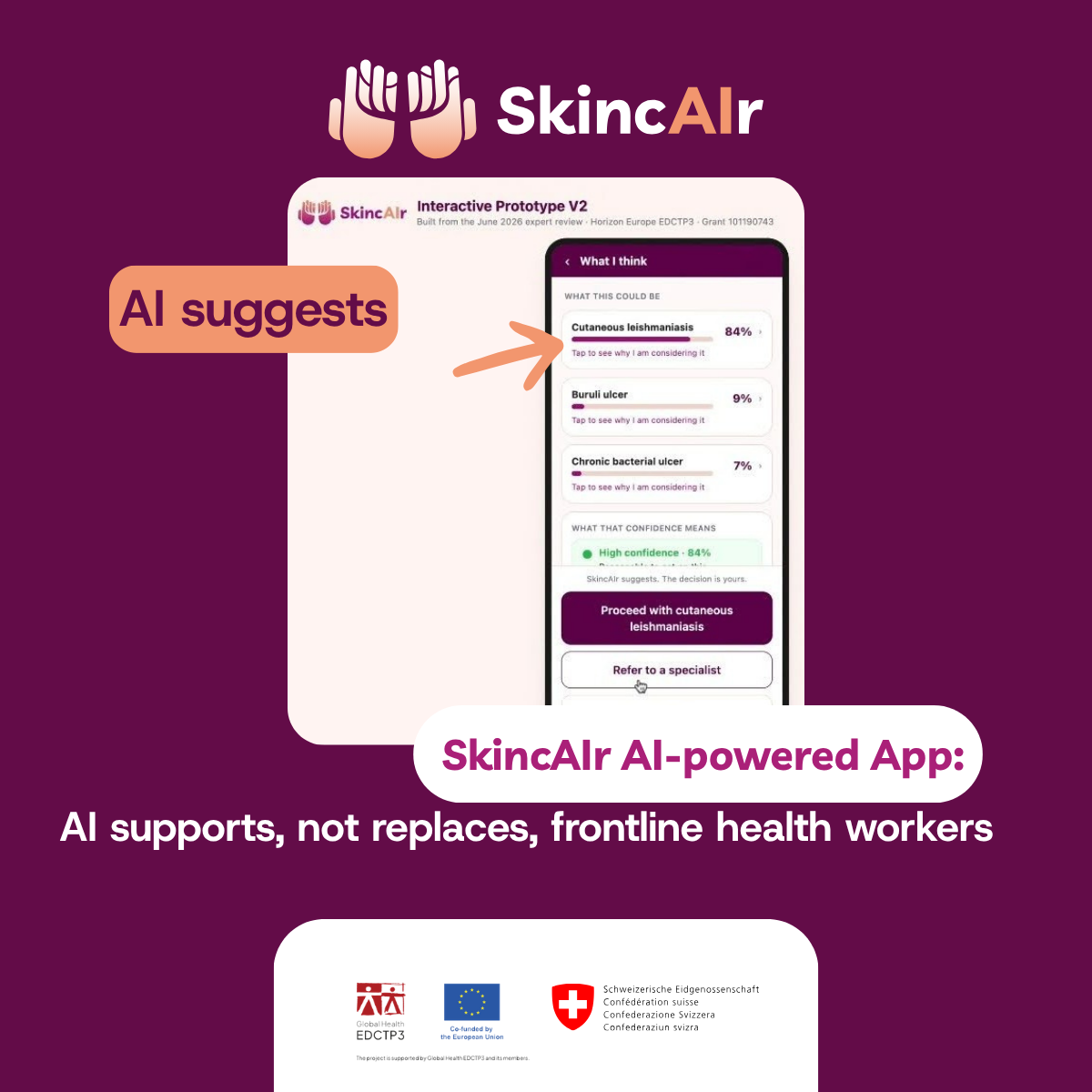
At SkincAIr, we are exploring how AI can support frontline healthcare workers to detect skin neglected tropical diseases (NTDs). The SkincAIr App is being designed to provide AI-supported suggestions, while allowing health workers to compare these outputs with their own observations and clinical judgement.
This ‘human-in-the-loop’ approach is central to the development of the SkincAIr AI-powered app, ensuring that it is useful, understandable and trustworthy. Rather than providing answers without context, the system is being developed to help healthcare workers understand the reasons behind generated outputs, recognise uncertainty, and determine when further expertise or referrals are required.
Designing for collaboration, not replacement
SkincAIr’s goal is to reinforce, rather than bypass, the expertise of healthcare professionals in primary care settings across Sub-Saharan Africa, ensuring they remain ‘in the loop’. To achieve this, the app will:
- Offer AI-generated suggestions alongside the health worker’s own assessment.
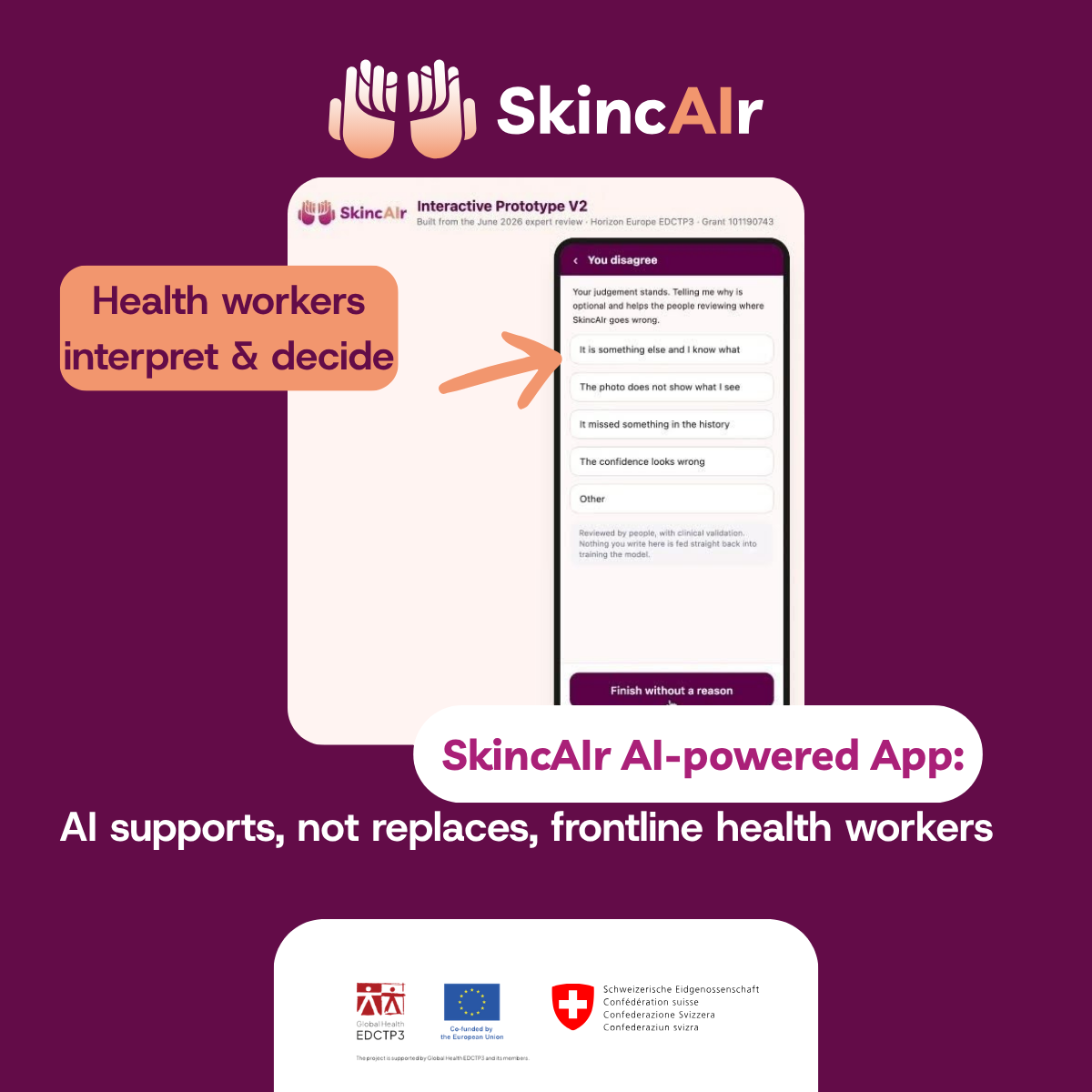
- Enable users to compare AI outputs with their own clinical observations and experience.
- Help workers understand the reasoning behind the suggestions and identify areas of uncertainty.
- Support decisions about when to seek further expertise or refer patients.
Co-design with frontline healthcare workers and dermatologists
The SkincAIr team is using feedback from frontline healthcare workers and dermatologists to improve the way the app communicates its suggestions and responds when users disagree with the AI. This continuous feedback loop is essential to ensure that the app:
- Speaks the language of everyday practice.
- Fits into real world workflows and constraints.
- Builds trust through transparency and explainability.
As David Shaikh from Sherwood Science explains, SkincAIr’s developers are working to ensure that AI never replaces healthcare professionals, but rather supports them in doing their work more efficiently and fairly for everyone.
Next steps
As the development of the AI-powered app continues, SkincAIr will test and refine it, taking into account feedback from health workers and specialists in the focus countries. Information on field activities, user testing and technical progress will be published on the SkincAIr website and in the SkincAIr newsletter.
If you want to always stay updated about our project, follow us on LinkedIn, Facebook, X and Bluesky!