

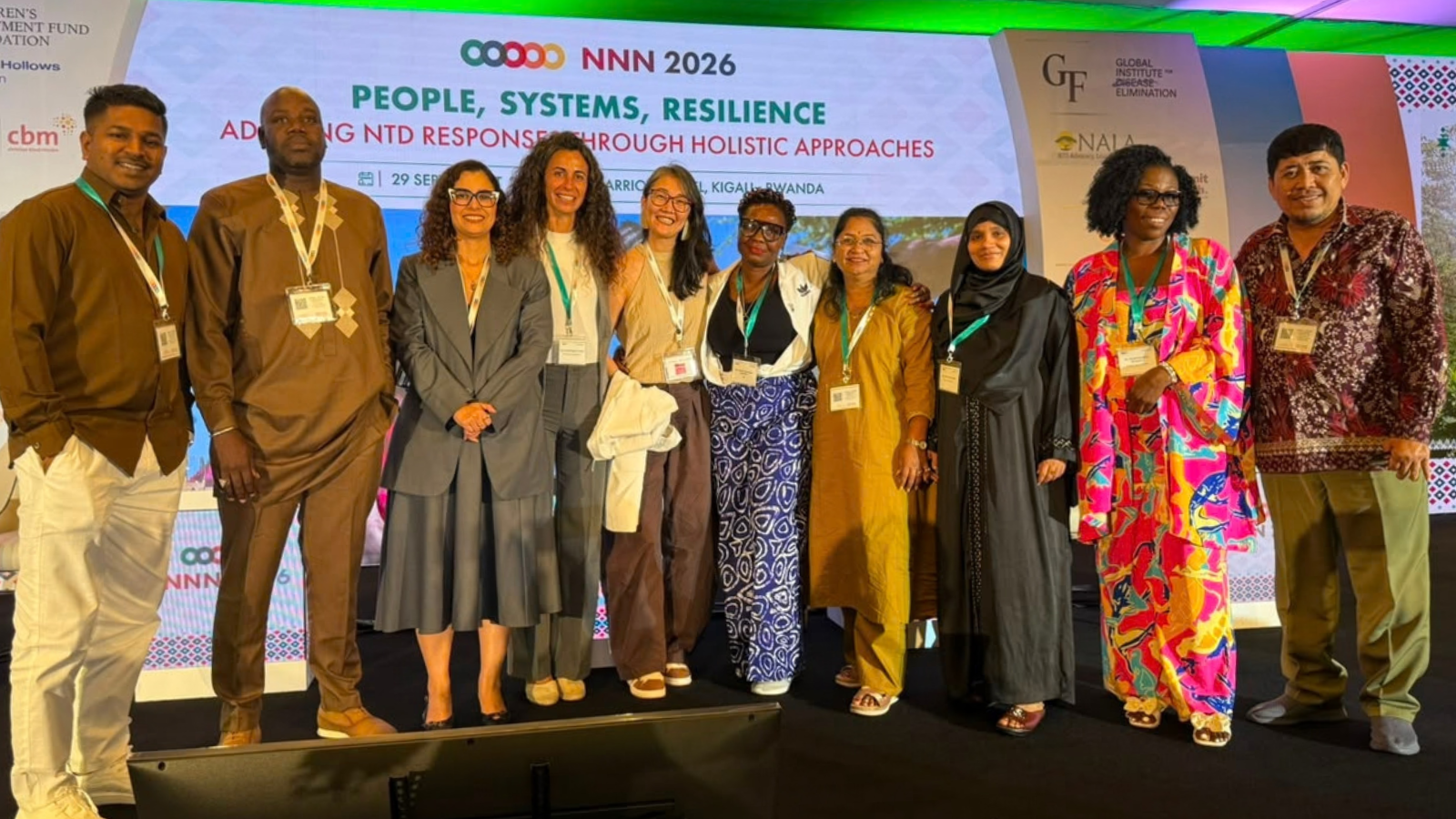
The 17th annual NNN Conference took place in Kigali, Rwanda, from 29 September to 1 October 2026. Organised by the Neglected Tropical Disease NGO Network, this year’s conference placed people, systems and long-term resilience at the heart of the NTD elimination agenda, under the theme “People, Systems, Resilience: adapting NTD responses through holistic approaches”.
Carla Rodríguez Cuesta, Co-Scientific Leader and Study Director of SkincAIr at Sherwood Science, represented the project in two sessions.
On 29 September she presented in Workshop 1.3, “Digital Innovation in Leprosy and NTDs”, organised by NLR (Until No Leprosy Remains) and Fundação NHR Brasil, alongside speakers from NLR, NHR Brasil, Universidade de Pernambuco and Tulane University, and a presentation of the WHO Skin NTDs App given on behalf of the World Health Organization. The session ended with a group discussion on implementation, ethics, scalability and the integration of AI tools into routine programmes.
On 1 October she gave the full presentation, “Lessons Learned from SkincAIr: Early Detection and Management of Skin-NTDs Using AI in Sub-Saharan Africa”, at the Leprosy Disease Specific Group session organised by ILEP (International Federation of Anti-Leprosy Associations) with NLR, to around sixty NTD programme managers, clinicians, researchers and representatives of organisations of persons affected by leprosy. The same session covered human rights and NTDs with the UN Special Rapporteur on leprosy, the repeal of discriminatory laws in Nepal and Senegal, and the new strategy of IDEA International, the global network of organisations of persons affected.
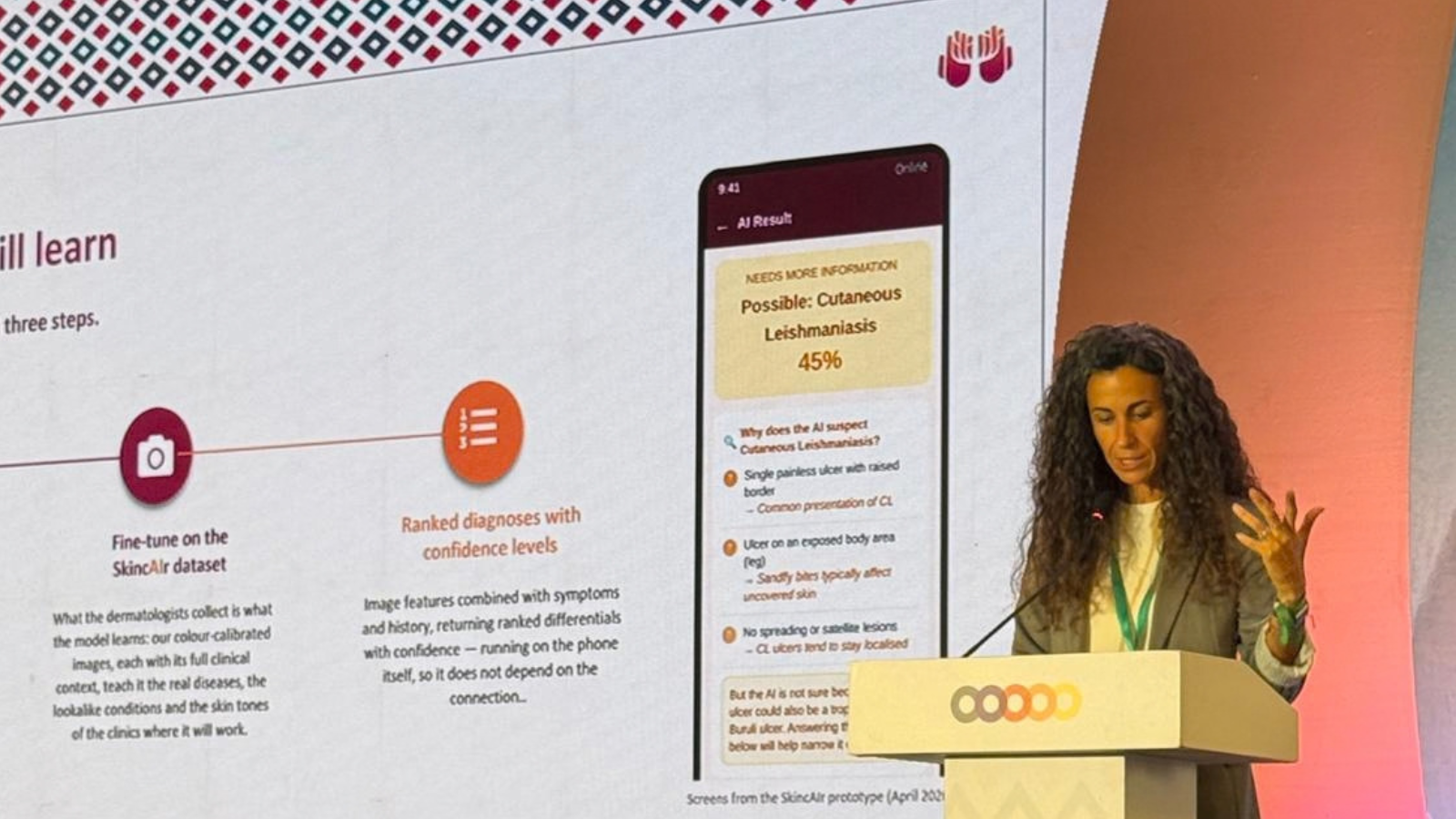
SkincAIr is a five year project funded by the European Union’s Horizon Europe research and innovation programme and Global Health EDCTP3 Join undertaking programme. Its main aim is to build an AI-powered diagnosis-support app for the early detection and management of skin-related neglected tropical diseases by frontline health workers in Kenya, Ethiopia, Nigeria, Senegal and the Democratic Republic of the Congo. In Kigali the project shared what the field has taught it so far. Lessons, such as that a diagnosis needs more than an image; that an AI tool must give reasons, not verdicts, and speak the health worker’s language; that it must build on what clinics already do; and that it must reach the cases that never come to a clinic.
You can read more about these lessons, and about what the project took home from the conference, here.
Since May 2026, SkincAIr’s dermatology teams in the five countries have enrolled 560 patients and collected 3,358 clinical images across the twelve target skin NTDs and their differentials (figures from the 23 September 2026 export), with consent the patient understands and data that stays protected. The next step is the evidence: publishing how the dataset was built and how the tool will be validated.
Thank you to ILEP, NLR and InfoNTD for the invitation — and to Elizabeth Talatu Williams, Liesbeth Mieras and Lesley White of NLR in particular — and to the speakers Geoff Warne, Beatriz Miranda Galarza, Aymée da Rocha, Patricia Takako Endo, Pralhad Kumar Mahat, Shovakhar Kandel, Papa Mamadou Diagne and Amar Timalsina. Behind the figures are the 49 members of the dermatology and field teams in the five countries, and the SkincAIr team across nine work packages that built the collection app, the quality control and the data pipeline behind them.
If you want to always stay updated about our project, follow us on LinkedIn, Facebook, X and Bluesky!