

The ‘Living Borders’ symposium took place from 21 to 23 May at the Eikones Forum in Basel. Organised by NOMIS Foundation Fellow Janina Wellmann, the symposium explored the concept of physical demarcations that are literally ‘alive’, and the imaginations and investigations surrounding them. The event addressed both natural borders made from biological material, such as skin, shell, crust, membrane, hide, bark or epidermis, and artificially created ‘living’ skins and ecological borders.
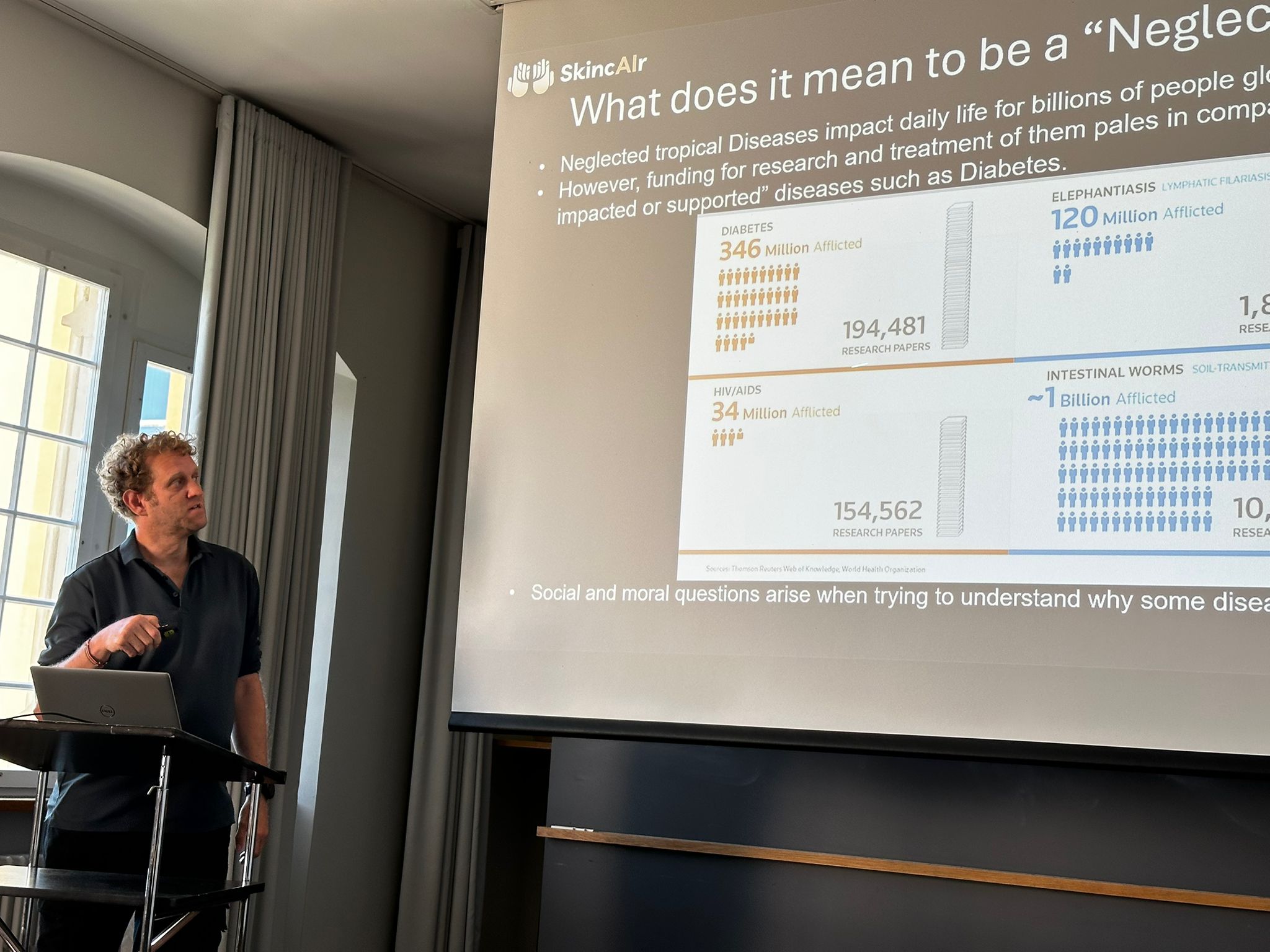
In this context, the presentation by Gil Sharvit of the Lucerne University of Applied Sciences and Arts on the SkincAIr project was very well received by symposium attendees. SkincAIr aims to create the world’s largest public skin NTD dataset (the first of its kind in sub-Saharan Africa) and deploy culturally tailored, privacy-preserving, open-source, interoperable solutions in Kenya, Senegal, Ethiopia, Nigeria and the Democratic Republic of Congo.
“We received lots of compliments about our project, team, vision and execution, and even several potential collaborations for the future”, emphasised Gil.
If you want to always stay updated about our project, follow us on LinkedIn, Facebook, X and Bluesky!