

Written by Teacup Lab.
In April 2026, our research team travelled to Ethiopia to continue the discovery research for SkincAIr. This fieldwork followed the first round conducted in Kenya and allowed us to explore how the realities of frontline health work compare across different clinical and institutional contexts.
Compared to Kenya, the Ethiopia fieldwork took place under more constrained travel conditions. Following safety recommendations, we focused primarily on Addis Ababa and only travelled to Arba Minch in Southern Ethiopia. To compensate for covering fewer regions, we aimed to include a wider range of facility types and socioeconomic contexts, including urban, peri-urban, and rural settings.
What health workers told us
Across the conversations and facility visits in Ethiopia, many findings confirmed what we had already seen in Kenya. Frontline health workers operate as generalists, skin conditions are difficult to distinguish, and diagnosis often happens under uncertainty.
At the same time, the Ethiopia fieldwork also surfaced several emerging insights: themes that appeared naturally in this context, often through the semi-open nature of the conversations. Because these themes did not emerge as clearly in Kenya, we do not yet know whether they are specific to Ethiopia, more prominent there, or simply not explored deeply enough in the previous round. For that reason, we are treating them as important questions for validation in Senegal and in the next round of work in Kenya.
Ethiopia also surfaced some important country-specific differences that may have implications for how SkincAIr is introduced, positioned, and designed in this context.
These are some of the main findings:
Clinicians rely more on standard references and in-person consultation
One of the clearest differences compared to Kenya was how clinicians seek support when they are uncertain.
In Kenya, informal digital consultation networks, especially through WhatsApp, appeared more established. Sharing clinical images with colleagues or specialists was already part of how many clinicians managed diagnostic uncertainty.
In Ethiopia, collaboration was also important, but it seemed to rely more on standard references, personal experience, and in-person consultation with colleagues or specialists. Digital peer consultation and image-sharing practices appeared less embedded in everyday workflows.
This suggests that SkincAIr may need a different adoption strategy in Ethiopia. Rather than building directly on an already established information-sharing culture, the tool may first need to position itself as a trusted clinical reference and reasoning aid.
Image capture is less normalised
Clinical image capture practices appeared less established in Ethiopia than in Kenya. Clinicians more frequently perceived patients as reluctant to being photographed, although in some cases this seemed to reflect clinicians’ general perception rather than direct evidence from patient refusals.
This matters because SkincAIr depends, at least in part, on the use of clinical images. In Ethiopia, the SkincAIr app may need to pay particular attention to how photography is introduced, how consent is handled, and how patients understand the purpose of taking an image.
Image capture should not be treated as a purely technical step. It may be just as important to clearly explain why images are needed, and what additional value they provide compared with text-based queries alone, so that clinicians feel more confident and willing to engage in this practice.
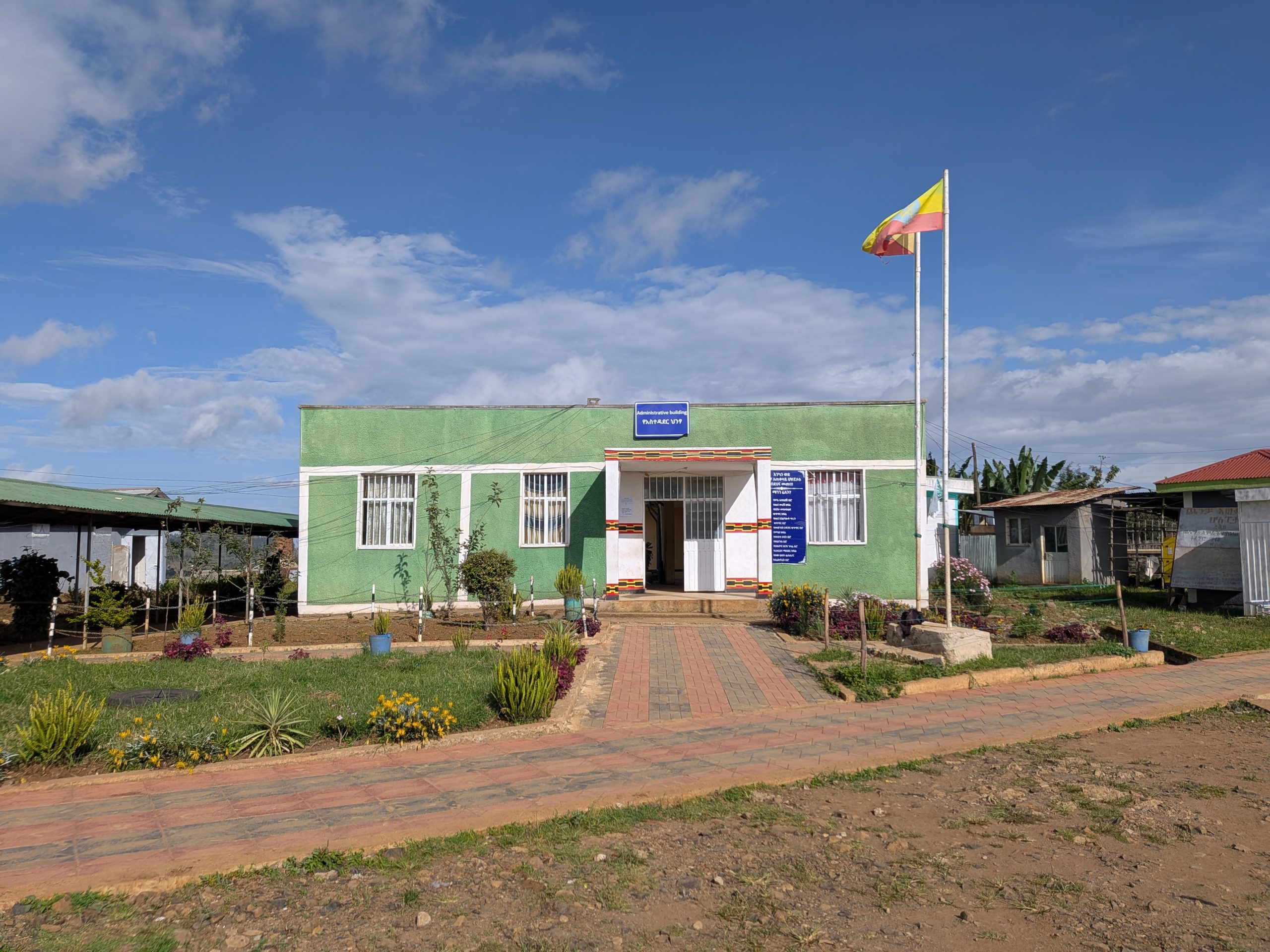
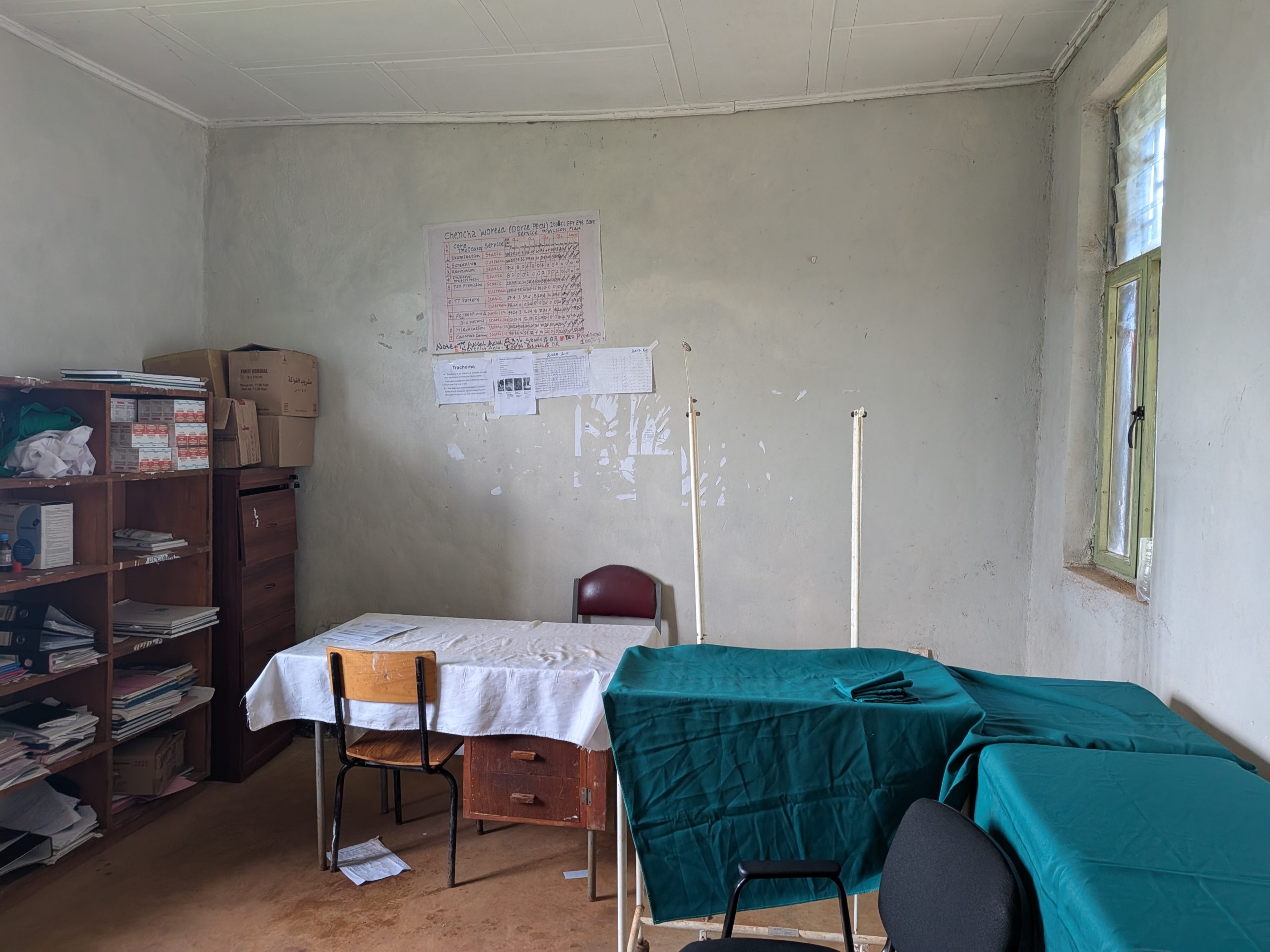
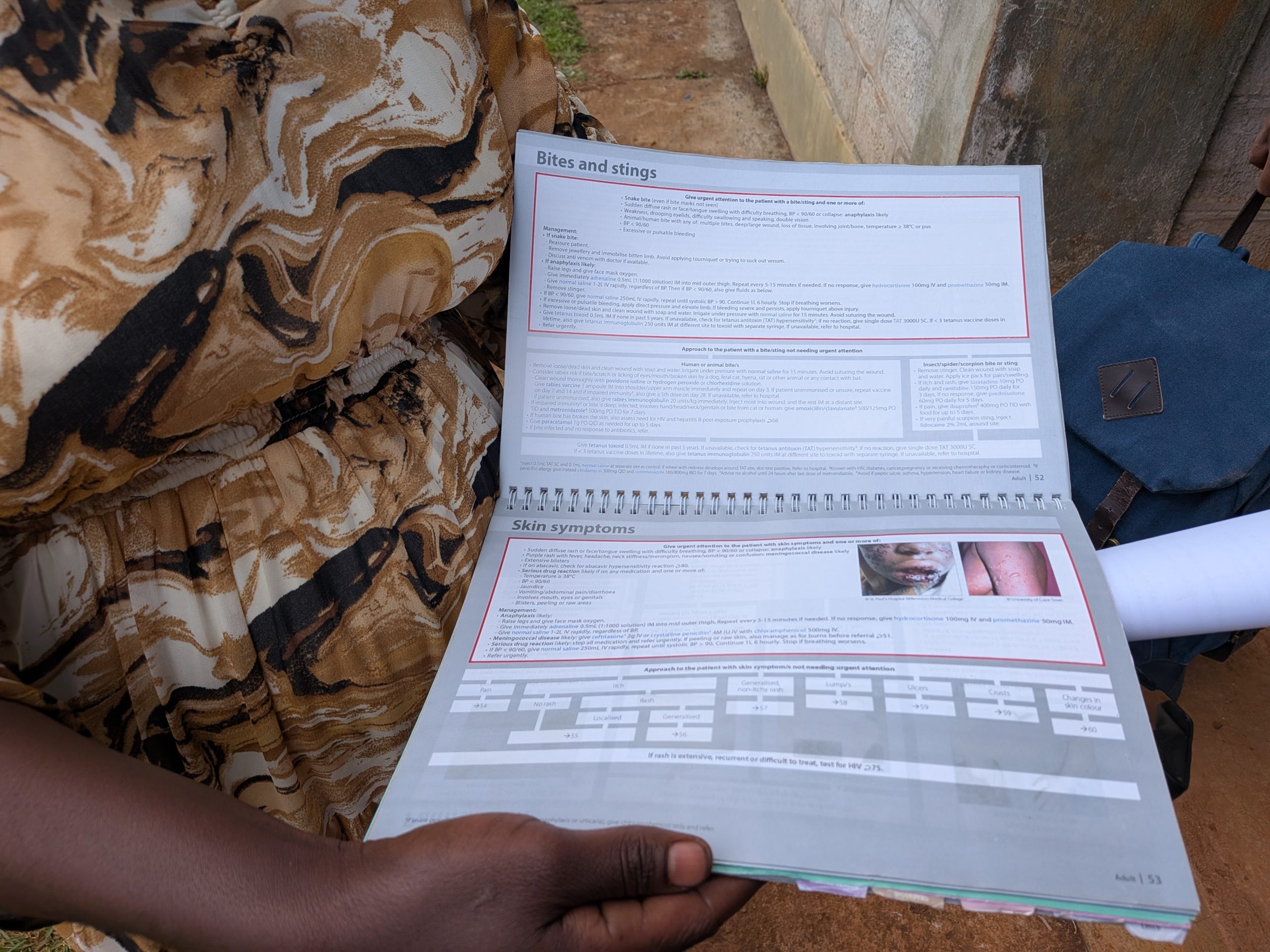
Digital health is established, but the ecosystem is fragmented
A key institutional aspect in Ethiopia is that digital health is already established at policy level. The interview with the Digital Health Officer indicated strong institutional openness to digitalisation, with digital health described as a core wing of the ministry.
However, the ecosystem was also described as highly fragmented, with interoperability posing a major challenge. In practical terms, this means that different digital health systems may not easily connect, exchange data, or work together.
For SkincAIr, adoption in Ethiopia may depend on showing how the tool fits within existing systems, governance structures, reporting workflows, and national digital health priorities.
AI familiarity is more mixed
Another important difference concerns AI familiarity and use.
In Kenya, several clinicians described using tools such as ChatGPT, DeepSeek, or Gemini as informal learning or reasoning aids. They did not treat these tools as decision-makers, but some already had a practical understanding of how AI could help them think through a case.
In Ethiopia, exposure to AI seemed more mixed and generally lower. Where AI was used, it was often through text-based descriptions of symptoms and patient history rather than image uploads.
This means SkincAIr should not assume a shared baseline of AI familiarity across countries. In Ethiopia, onboarding may need to be more guided, explaining clearly what the tool can and cannot do, and allowing clinicians to build trust gradually through use.
Trust in AI is built through use, not only through references
In Ethiopia, trust in AI did not seem to depend primarily on seeing the sources or references behind a response. Instead, clinicians appeared to judge reliability through the coherence, consistency, and usefulness of the answers over time. This is important because poor early experiences with the solution can be decisive. If the tool gives irrelevant, overly confident, or locally unrealistic suggestions, clinicians may lose trust quickly.
Clinicians prefer differential diagnosis over single answers
A strong emerging insight from Ethiopia was the preference in some cases for receiving several possible diagnoses rather than a single definitive answer.
This makes sense in a context where clinicians are already used to reasoning through uncertainty. A tool that narrows possibilities, explains why certain options are more or less likely, and prompts further questioning may feel more useful and trustworthy than a tool that simply outputs one answer.
For SkincAIr, this reinforces the need to support clinical reasoning rather than replace it.
AI use may raise concerns about professional credibility
One theme that emerged more prominently in Ethiopia than in Kenya was the perceived tension between using AI and maintaining professional credibility.
Some clinicians expressed reluctance to use AI during a consultation because they worried patients might interpret this as a lack of expertise or preparation. The issue is not only whether clinicians trust the tool, but whether using the tool visibly might affect the patient’s trust in the clinician.
This implies that SkincAIr may need to fit into the workflow in a way that supports the clinician without undermining their authority. At the communication level, it also reinforces the need to position SkincAIr as part of the set of tools clinicians already use to support their work, rather than as something that replaces their expertise or clinical judgement.
Educational content may need local adaptation
As in Kenya, clinicians saw value in SkincAIr as a training or learning aid. However, Ethiopia also raised the question of whether educational content should be locally adaptable.
For example, participants suggested that how clinicians talk about stigma, patient education, or community perceptions may vary significantly between regions. This points to the need not only for feature customisation, but also for content customisation.
How these insights are shaping the solution
After the Ethiopia fieldwork, we carried out a workshop with project partners to explore how the new research findings might challenge the existing first version of the prototype and how emerging insight can as well be translated into early design decisions.
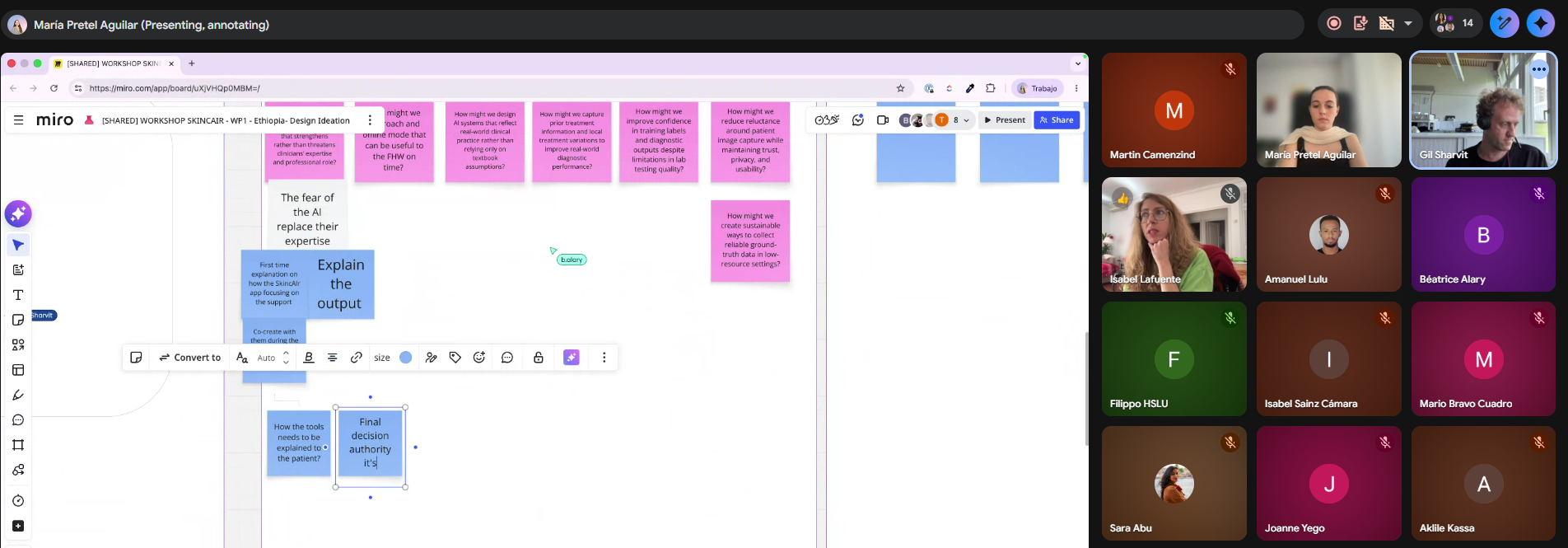
At this stage, the prototype is still evolving. We are still waiting for the discovery fieldwork in Senegal, planned for July 2026. Once that final discovery round is completed, we will have a broader evidence base across the three countries (Kenya, Ethiopia, and Senegal) to further shape and refine the prototype before validation.
So the points below should be read as early design directions informed by the Ethiopia and Kenya fieldwork, and to be further reviewed once the Senegal findings are available.
Clinical uncertainty is part of everyday care
SkincAIr should not assume that diagnosis is always a clear yes/no decision. The SkincAIr app should support reasoning under uncertainty by showing possible diagnoses, confidence levels, and relevant next steps rather than presenting a single answer as final.
Clinicians may not all have the same familiarity with AI
The prototype should include clear onboarding and framing. In Ethiopia especially, it may be important to explain what the AI can do, what it cannot do, and how clinicians should interpret its outputs.
Image capture may require additional trust-building
Since photography appears less normalised in Ethiopia, the app should support clear consent practices and help clinicians explain why an image is being taken. The image-taking process should feel clinically legitimate, respectful, and easy to explain to patients.
Differential diagnosis may be more useful than a single output
The prototype should explore ways of presenting several likely conditions, explaining why each one is being considered, and helping clinicians narrow down the possibilities through follow-up questions.
Treatment information must be locally grounded
Treatment recommendations should reflect real local practice, including national guidelines, available medicines, referral pathways, and what is realistically possible in each facility context. We still need to define the best way to ensure this, for example through Ministry of Health alignment, input from local clinicians, or other local validation mechanisms.
Digital health fit matters
SkincAIr should not be introduced as just another standalone digital tool. Its implementation will need to consider existing digital health systems, interoperability, data governance, reporting requirements, and institutional ownership.
Offline and low-connectivity use remains important
Even where digital health is institutionally supported, everyday connectivity cannot be assumed. SkincAIr should continue to support offline or low-connectivity workflows so that core functions remain available at the point of care.
Educational content may need to be adaptable
Patient-facing and training content should be designed with the possibility of local adaptation in mind. This may include language, examples, stigma-related guidance, referral advice, and regionally relevant communication strategies.
Prototype validation in Ethiopia
During the last quarter of 2026 we will return to Ethiopia to test the first version of the SkincAIr prototype with local participants and collaborators. This will help us understand whether the tool is clear, useful, clinically relevant, and appropriate for the realities of Ethiopian healthcare settings.
The findings from Ethiopia will be compared with those from Kenya and Senegal, so that SkincAIr can respond to shared clinical challenges while also accounting for country-specific adoption conditions.
If you want to always stay updated about our project, follow us on LinkedIn, Facebook, X and Bluesky!